Back to Projects
AI SaaS
Desktop
WWW

RankLens

AI SEARCH VISIBILITY

An AI search visibility SaaS that analyzes a public URL across SEO, AEO, and GEO signals, then turns the result into scores, reports, competitor comparisons, monitoring, and improvement actions.

SEO/AEO/GEO scoringAI recommendationsCompetitor comparisonPDF/CSV exportMonitoring alerts
RankLens
01

Challenge

The challenge was to avoid building a generic SEO checklist and instead create a repeatable SaaS workflow: enter a URL, classify and analyze the page, score it across search and AI-answer categories, preserve history, support paid full analysis, compare competitors, and turn diagnosis into monitoring.

02

Solution

I structured RankLens around URL-level analysis. A public page is fetched, parsed, classified, scored by rule-based engines, enhanced with AI-assisted recommendations, and stored as a reusable report connected to exports, comparison, monitoring, billing, and dashboard history.

03

Impact

RankLens reframes SEO analysis as AI-search readiness analysis: a practical workflow for diagnosing pages, prioritizing improvements, comparing competitors, exporting reports, and building a foundation for recurring monitoring revenue.

Analysis Engine

A URL becomes a scored AI-search report.

RankLens is strongest when the page shows the transformation: a public URL is parsed, classified, scored, explained, compared, exported, and monitored.

URL

Public page input

Parse

HTML and metadata

Classify

Page type and intent

Score

SEO, AEO, GEO

Report

Evidence and actions

Monitor

History and alerts

RankLens analysis report overview

Scoring Model

SEO, AEO, and GEO are separate signals, not one vague score.

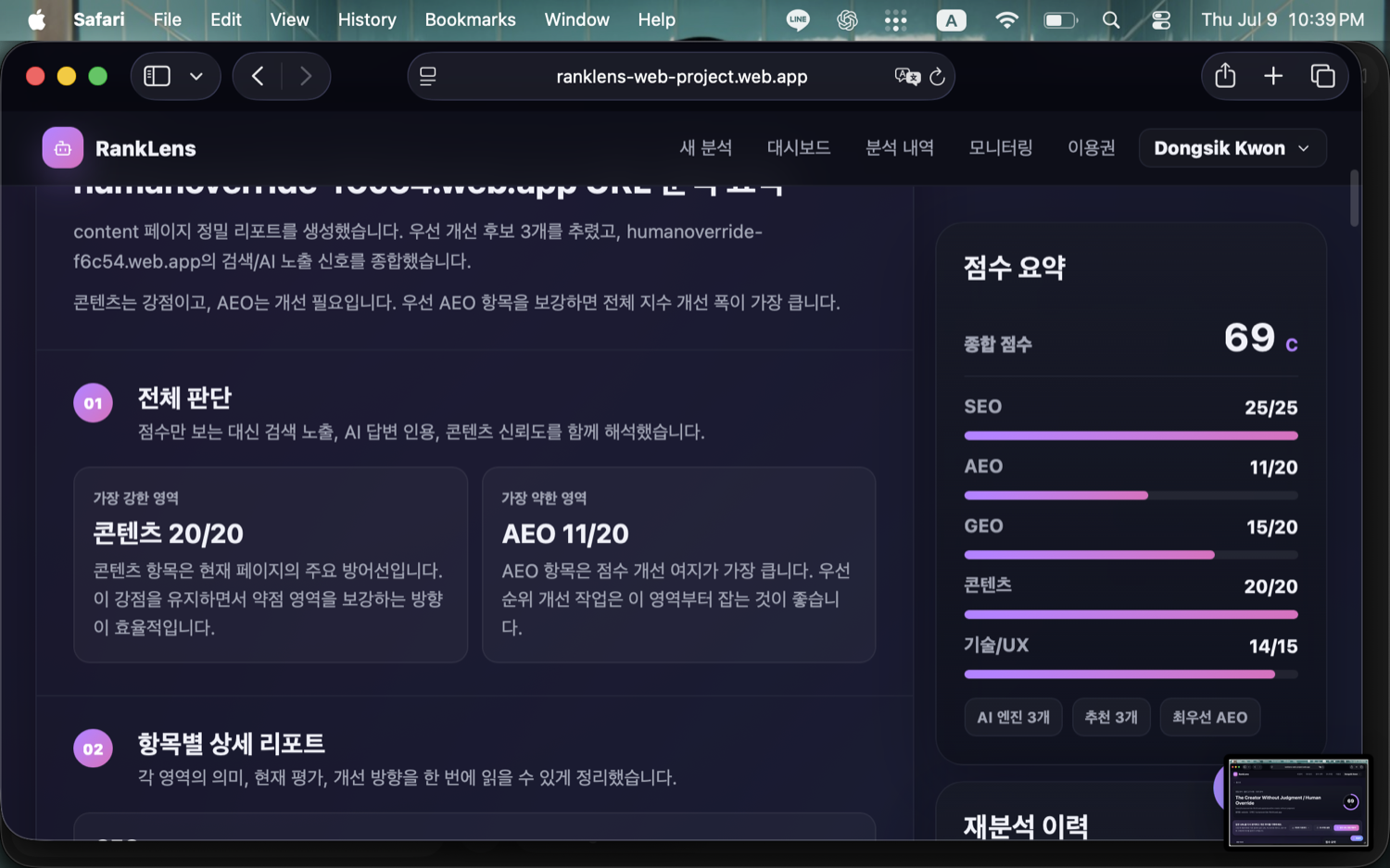
The report separates traditional search readiness from answer-engine and generative-engine visibility, then keeps category evidence attached to the score.

SEO 25/25

Search crawlability, titles, descriptions, structure, and canonical signals.

AEO 11/20

Answerability, direct question coverage, concise summaries, and extractable passages.

GEO 15/20

Generative citation readiness, source clarity, authority cues, and entity context.

Content 20/20

Topic coverage, useful structure, internal evidence, and readable sections.

Tech/UX 14/15

Performance, mobile readability, semantic HTML, and technical reliability.

Report UX

The result is not a score page. It is an improvement queue.

Each diagnosis connects a grade, category bars, written judgment, evidence, and next actions so the user knows what to fix first.

Strongest area Content 20/20

Keep the page's structured explanations while improving citation support.

Weakest area AEO 11/20

Add answer blocks, FAQ-style headings, and direct responses to expected queries.

Priority action Evidence and trust

Attach sources, author/reviewer signals, and update notes to claims.

Export PDF / CSV

Turn the analysis into client-ready reports or spreadsheet-ready history.

RankLens report summary
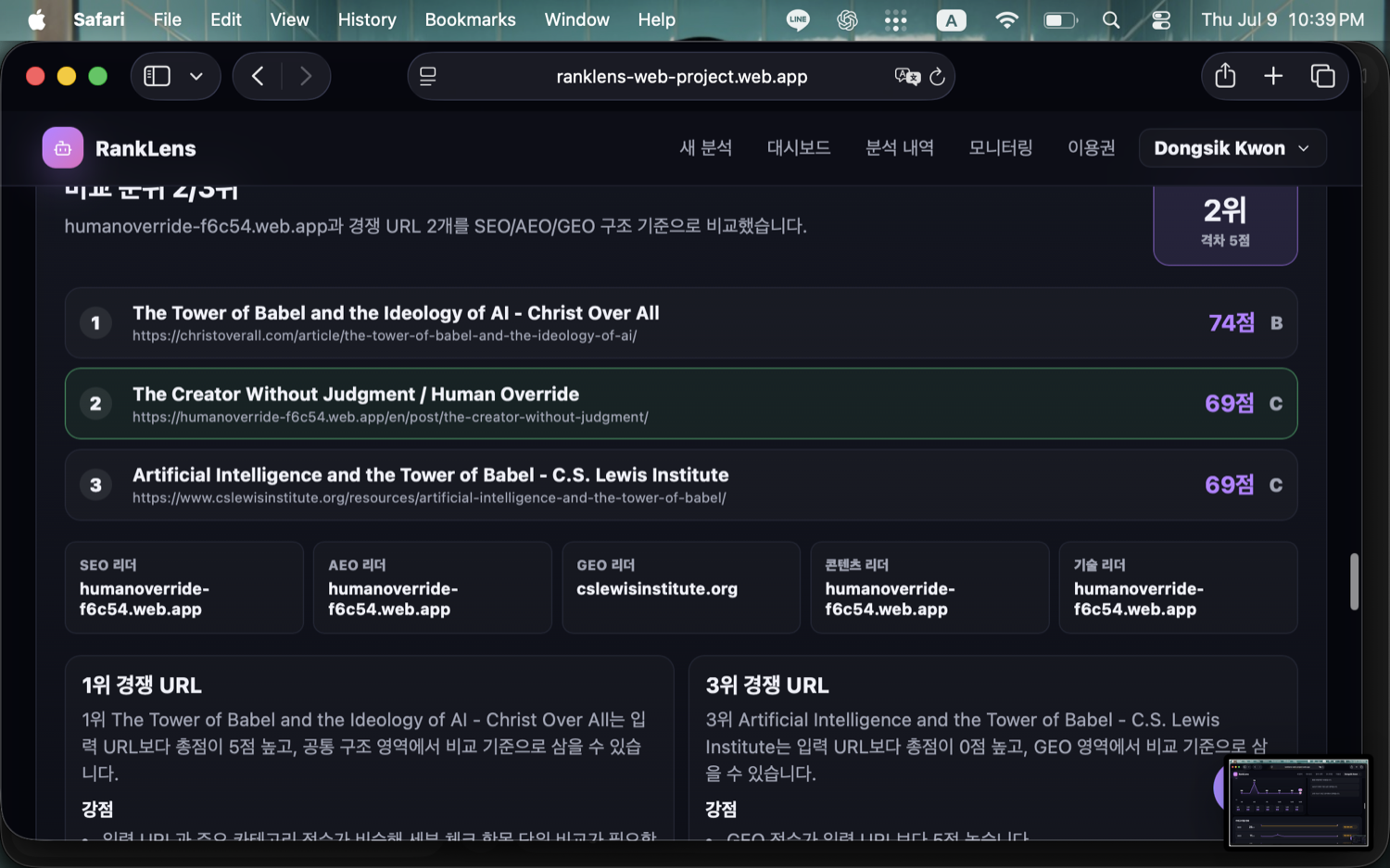
1
Christ Over All
74 · B
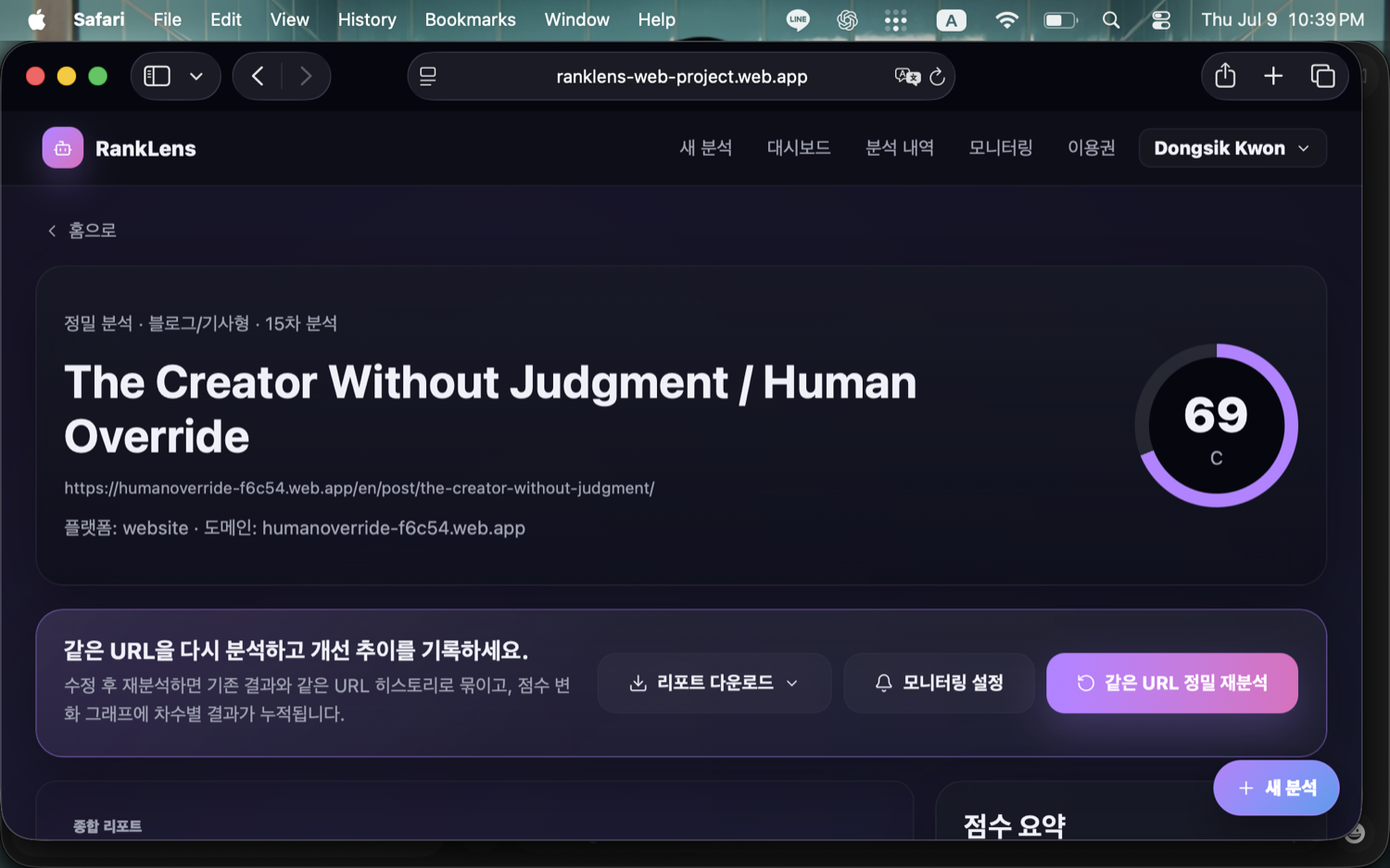
2
Human Override
69 · C
3
C.S. Lewis Institute
69 · C

Competitor Compare

Comparison turns analysis into a decision.

RankLens compares the target URL with competitor pages, finds category leaders, explains the gap, and converts the result into priority actions without charging twice for the same full analysis.

RankLens competitor comparison
Competitor ranking and category leaders

Monitoring Loop

One-time diagnosis becomes recurring visibility monitoring.

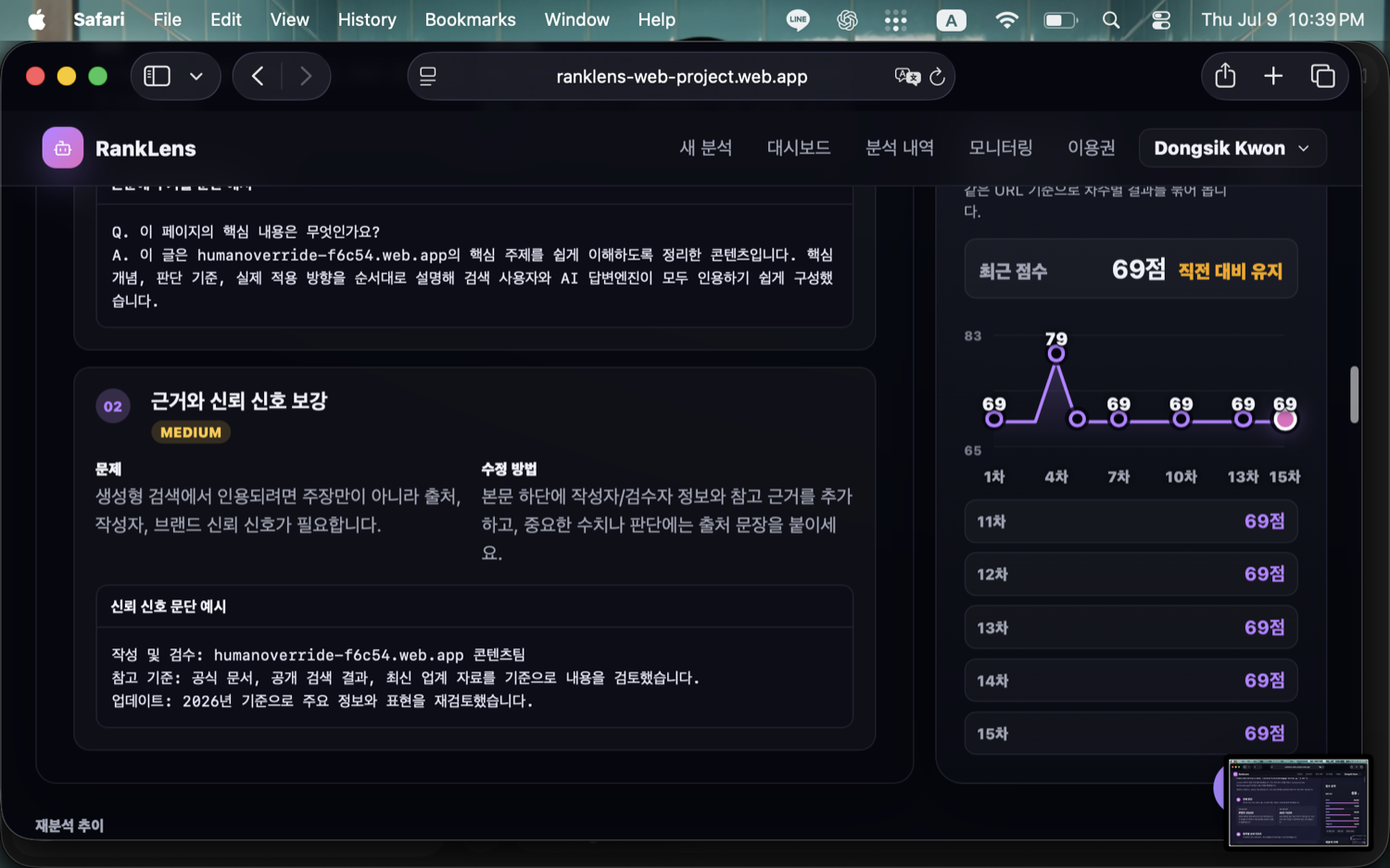
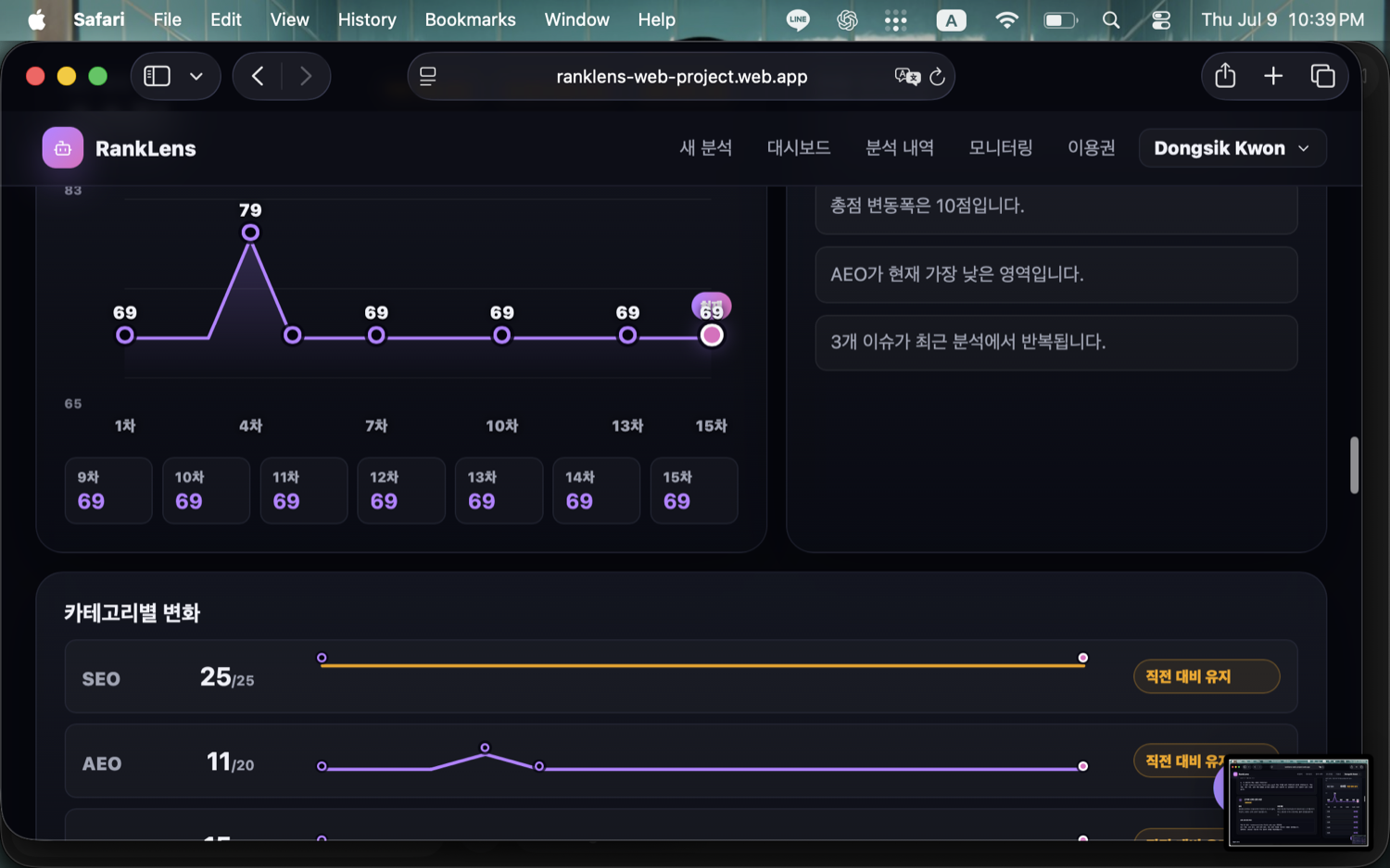
Saved reports, reanalysis history, score-drop risk, content-change alerts, exports, usage quotas, and billing turn the product into a SaaS workflow instead of a single free tool.

01History

Same-URL results are grouped so trend changes stay readable.

02Alerts

Monitoring can notify score drops, content changes, and access errors.

03Exports

PDF and CSV reports move the analysis into client and team workflows.

04Billing

Quota and entitlement checks connect full analysis to a paid SaaS model.

RankLens reanalysis trend
RankLens category trend
All Projects Contact